


Two Women
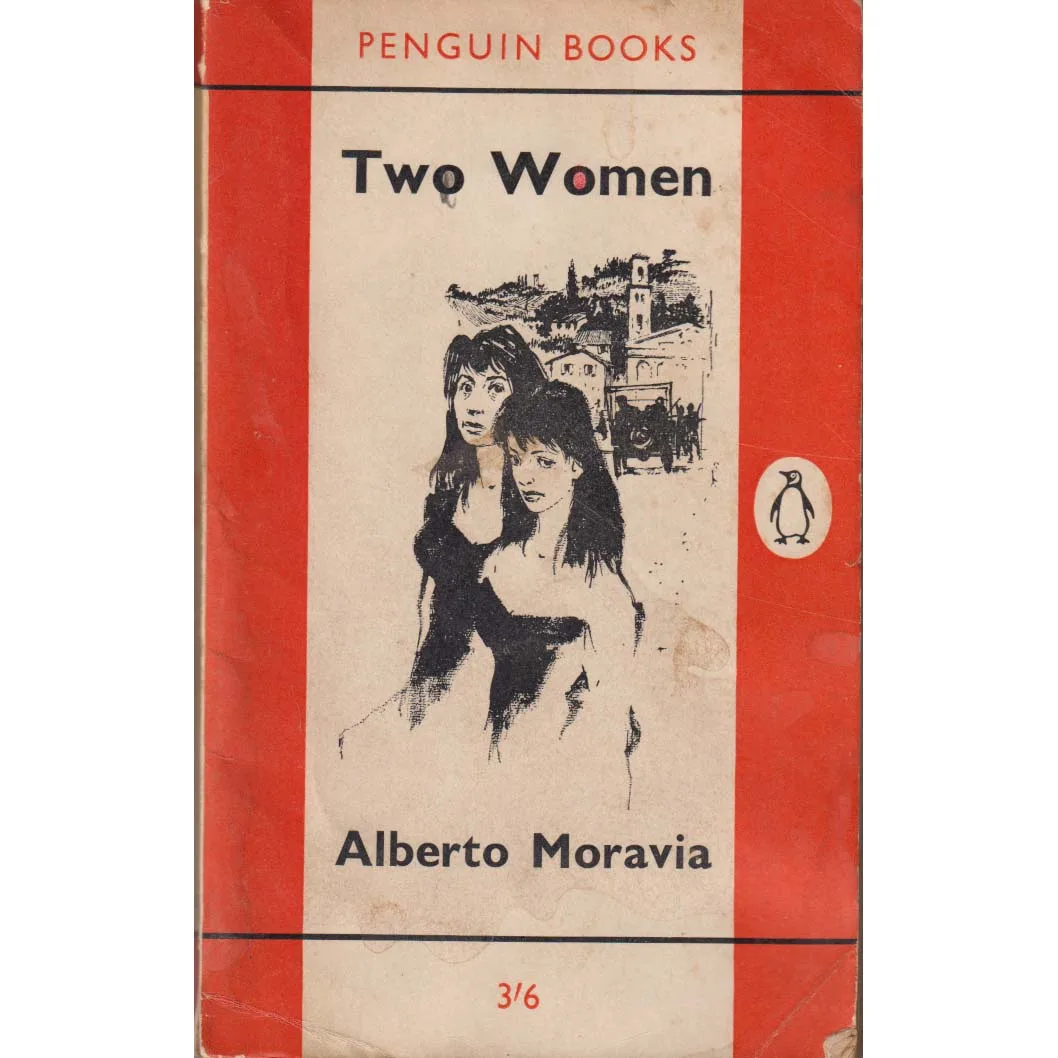
Publisher: Penguin Books
Format: Paperback
ISBN: none
Two Women (1961) by Alberto Moravia — Penguin Books
ISBN: None (because 1961 assumed the title was enough and, honestly, it is)
Condition: Good (as sold by Crappy Old Books, where “Good” means “the paperback is holding up better than Europe did”)
Some novels wear their history like a medal. Two Women wears it like a bruise. Alberto Moravia’s famous wartime story is lean, unsentimental, and quietly ferocious—a book that looks like a simple Penguin paperback until you open it and realise you’re holding a whole moral weather system: survival, fear, motherhood, class, and the way war doesn’t just destroy buildings, it rearranges people from the inside.
At its centre are the two women of the title: a mother and her teenage daughter, trying to outpace danger as Italy convulses under the pressure of war. They flee, they bargain, they improvise, they endure—because in Moravia’s world the grand slogans and heroic posters are background noise, and the real story is always about what ordinary people have to do to get through the day. The irony is that “ordinary” becomes impossible the moment violence becomes routine. And Moravia is very good at showing exactly how that happens—without melodrama, without sentimentality, without the luxury of pretending anyone is untouched.
This is not a cosy classic. It’s a book that keeps its voice plain because the events don’t need decoration. Moravia writes with a cool clarity that makes the emotional punches land harder. He’s not interested in poetic war-myth. He’s interested in what war does to bodies, to trust, to relationships, to the fragile assumption that adults can protect children. The tension isn’t just in soldiers and bombs; it’s in hunger, in rumours, in the shifting behaviour of strangers, in the constant calculation of risk—where every decision feels wrong and still has to be made.
And yet—this is the important part—Two Women isn’t only bleak. It’s also a fierce study of resilience: the stubbornness of love, the grit of survival, the way people keep going even when their faith in the world has been sanded down to almost nothing. Moravia doesn’t romanticise it. He simply shows it: endurance as a daily act, not a grand speech.
There’s also a particular, slightly darkly comic pleasure in the packaging: a 1961 Penguin edition, calm and respectable, like it’s offering you a mild cultural improvement. Here, says Penguin, have a serious European novel. You’ll learn something. What you learn, Moravia ensures, is that the human capacity for survival is enormous—and so is the damage that can be done to it.
This copy is listed as Good, sold by Crappy Old Books, which means it’s solid, readable, and has that honest vintage paperback charm—likely some gentle shelf wear, perhaps a touch of page toning, the general patina of a book that has been read with concentration rather than casually skimmed. It’s still entirely fit for purpose: to be opened, read, and remembered.
Buy it if you like:
-
wartime fiction that focuses on civilians, not slogans
-
moral realism: clear-eyed, unsparing, humane
-
classics that don’t flatter you, but deepen you
-
novels that feel simple on the surface and devastating underneath
Two Women is a powerful, necessary book: not loud, not showy, just relentless in its honesty. In Good condition from Crappy Old Books—ready to remind you that history isn’t only made by generals, it’s endured by people trying to keep their loved ones alive.
Keep browsing: See more Fiction books Other books by Alberto Moravia
